Every major asphalt shingle manufacturer in North America agrees on this. Pressure washing is not an approved cleaning method for asphalt shingles. Doing it can void the warranty and shorten the life of the roof.
Here's where that consensus comes from, what it actually says, and what it means when you're hiring someone to clean your roof.
Why Manufacturer Position Matters
Asphalt shingle warranties usually run 25 to 50 years. They cover defects in materials, premature granule loss, and other manufacturer-side problems. They don't cover damage caused by improper cleaning, walking on the roof, or storm damage.
If a roof fails before the warranty period and the homeowner files a claim, the manufacturer sends an inspector. The inspector looks for the cause. If they see signs of high-pressure water damage, the warranty claim gets denied. The homeowner is out of pocket for the replacement.
The signs of pressure-washing damage are obvious to a trained eye. Localized excess granule loss. Damaged flashing. Cracked shingle edges. Inspectors have seen this damage thousands of times and they know what it looks like.
The Industry Position
The cleanest source on this is the Asphalt Roofing Manufacturers Association. ARMA is the industry body whose members include GAF, Owens Corning, CertainTeed, and most other major shingle producers. When all of those companies agree on a cleaning method, the answer comes through ARMA.
From ARMA's published guidance on cleaning asphalt roofs:
"Never use a pressure washer to clean an asphalt shingle roof as this will cause granule loss and very likely premature failure of the roof system."
The full document is on ARMA's site. It's the most authoritative public statement on the topic, and it's what every responsible cleaner in the industry references.
What ARMA Recommends Instead
ARMA's recommended method is straightforward:
- A cleaning solution applied with a low-pressure sprayer
- Allowed to dwell on the roof for a controlled time
- Rinsed with low-pressure water
- No scrubbing
- Pre-soaking and post-rinsing of landscaping to dilute any runoff
- Walking on the roof minimized to prevent damage to shingles and flashing
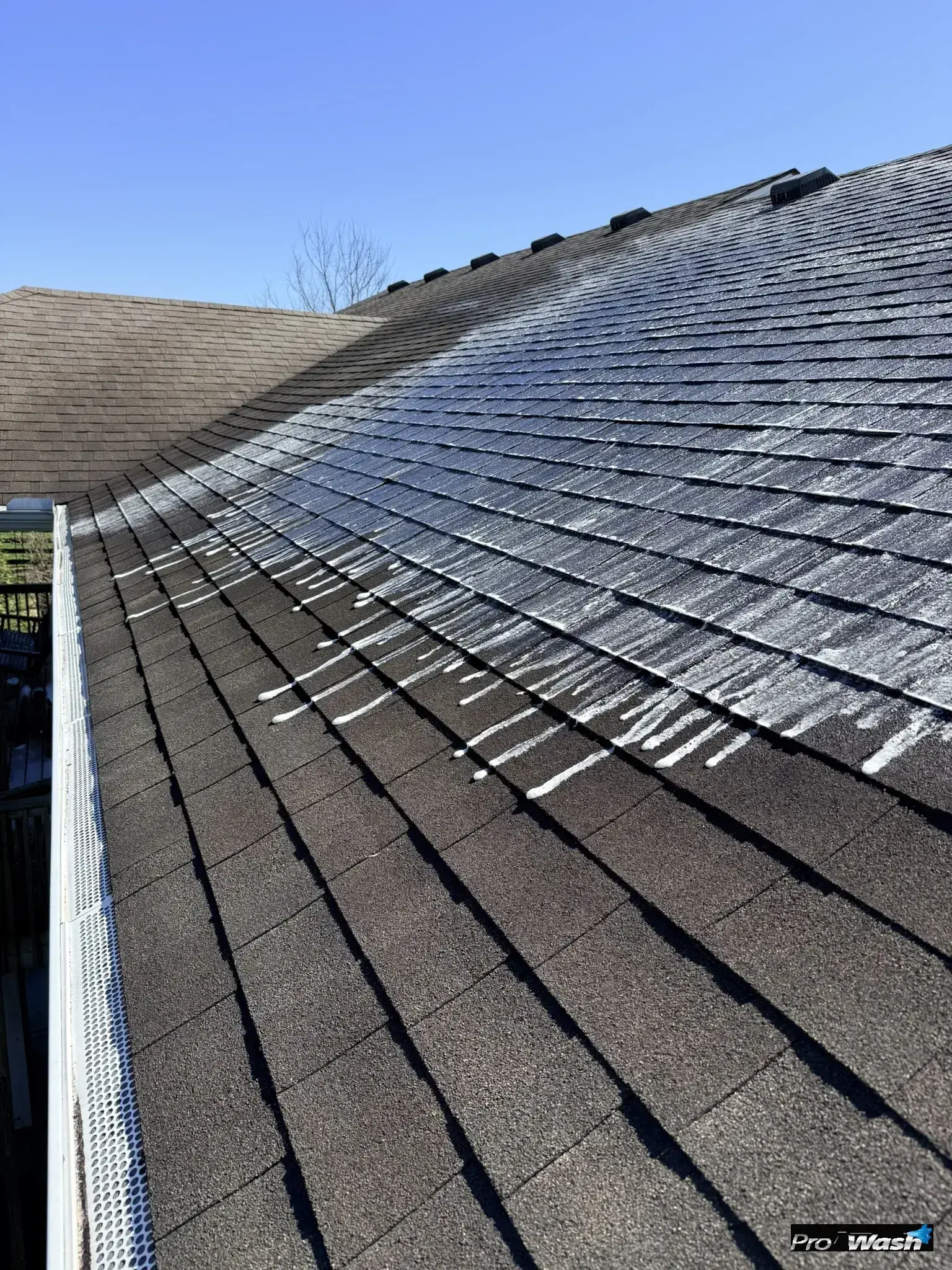
This is the soft-wash method. It's what we use on every roof we clean.
What the Big Three Manufacturers Say
Each of the three largest North American shingle manufacturers also publishes their own homeowner guidance. The three are aligned with the ARMA position.
GAF is the largest shingle manufacturer in North America. Their public-facing maintenance guidance is to use only manufacturer-approved low-pressure cleaning methods. They don't endorse pressure washing on asphalt shingles. Their warranty documents are available on their site.
Owens Corning is one of the largest building materials manufacturers in North America. Their published position aligns with ARMA, recommending the low-pressure chemical-wash method and warning against aggressive cleaning techniques that can dislodge granules.
CertainTeed publishes a Shingle Applicator's Manual and homeowner care guidance that recommends low-pressure cleaning with a mild solution rather than pressure washing. The applicator manual is publicly available.
If you want to verify any of this directly, look up the warranty document for whatever shingle is on your roof. The cleaning and maintenance language is in there.
How Damage Affects the Warranty
Most warranties have language to the effect that the warranty doesn't cover damage from improper cleaning, foot traffic, or modifications to the roof. Pressure washing is improper cleaning under that language.
The way it usually plays out is, a homeowner has a roof failure 10 to 15 years before they expected. They file a warranty claim. The manufacturer sends an inspector. The inspector examines the granule pattern and shingle condition. If they see pressure-washing damage, the claim is denied with a written report explaining what they found.
Even if the roof was only pressure washed once, eight years before the failure, the damage is visible enough for inspectors to identify.
What This Means When You Hire Someone
If a contractor offers to pressure wash your roof, especially if they're cheaper than a soft wash service, hire someone else. They're either uninformed or willing to risk your warranty to get the job done quickly. Neither one is acceptable.
Five questions worth asking anyone you're considering:
- What method do you use on asphalt shingles?
- Are you familiar with ARMA's cleaning guidelines?
- What chemicals are you using?
- Will you be walking on the roof?
- Do you carry liability insurance?
The right answers are, soft wash with a sodium hypochlorite-based solution, yes familiar with ARMA, controlled chemistry rinsed thoroughly, no walking on the roof if it can be avoided, and yes with insurance certificates available.
What We Do
We follow the ARMA method on every roof. Pre-soak the landscaping, mix the solution to the right concentration, apply at low pressure from the ground, dwell, rinse, post-soak the landscaping. We've been doing this since 2009 and we've cleaned thousands of roofs in Central Kentucky on the same method.
If you want to verify our process matches manufacturer requirements before we come out, call us at 859-312-0704. We'll walk you through exactly what we use and what concentrations. You can also ask for our insurance certificate before we start.
Pressure washing a roof is one of the most expensive shortcuts a homeowner can take. A manufacturer-approved soft wash costs about the same and protects a $15,000-plus investment.