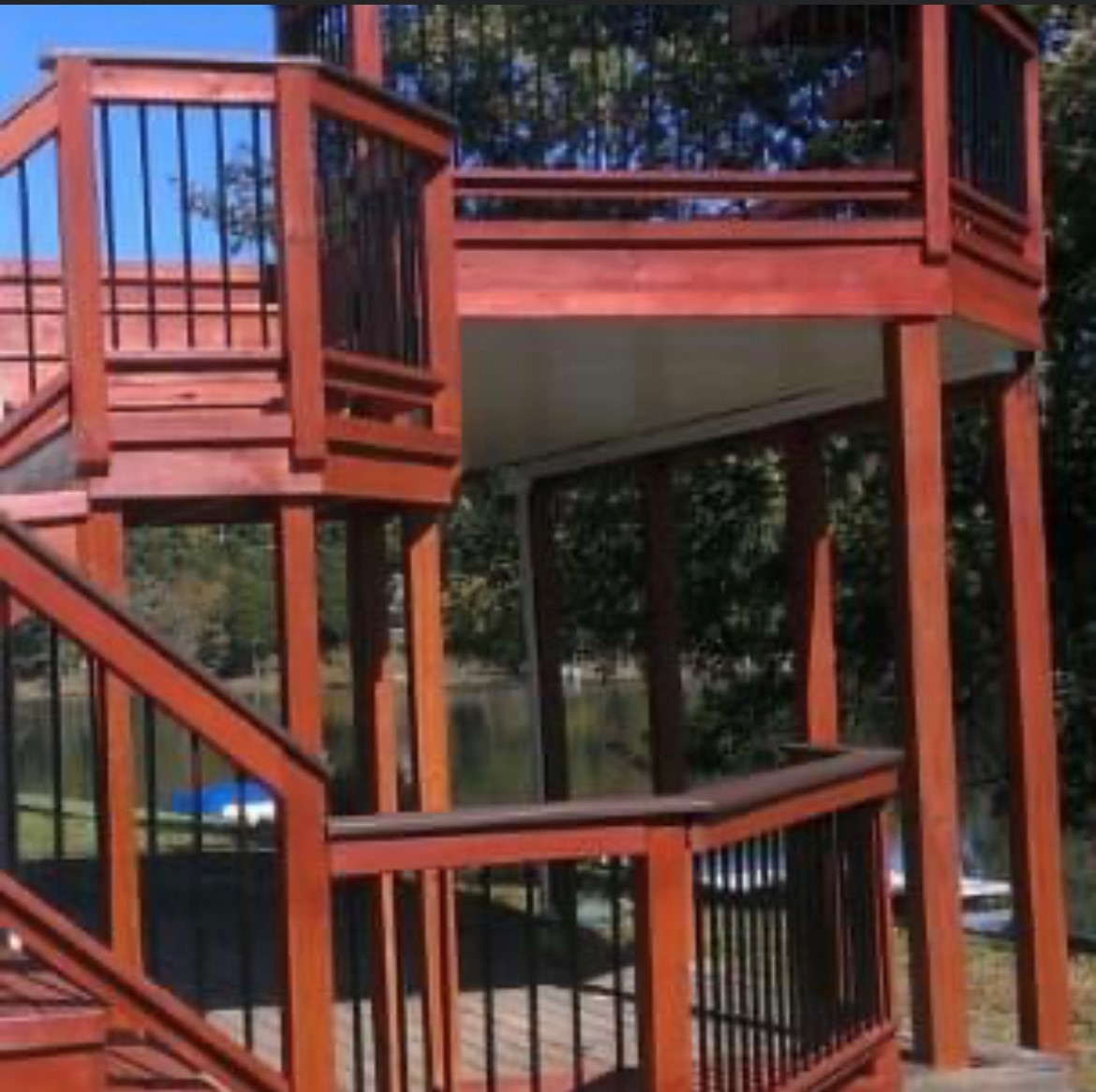
Your deck is outside every day. Sun, rain, humidity, foot traffic, it takes a beating year-round. A lot of homeowners wait until the wood looks bad before they do anything about it. By then, the damage is already happening underneath the surface.
Here's what we see when a deck hasn't been protected: the wood starts to gray out, dry, and crack. UV rays break down the fibers over time. Moisture gets in, and once moisture gets in, you're looking at splitting, warping, and eventually rot. That's not a cleaning problem anymore. That's a replacement problem. Keeping up with cleaning and staining is almost always cheaper than replacing boards.
The Two-Step Process We Use
We don't just rinse a deck and call it clean. We run a two-step process on every deck we work on.
First, we apply a commercial-grade cleaner. This isn't the stuff you pick up at a big box store. It breaks down dirt, mold, mildew, and the grime that works its way down into the wood fibers. You can't see all of it, but it's there, and it blocks stain from doing its job.
After the cleaner does its work, we come back with a brightener. The brightener brings the wood back to life, opens the grain back up and gets it looking close to new again. It also preps the surface so the stain or sealer has something to actually grab onto.

When We Have to Strip First
Sometimes we show up to a deck that already has stain on it, but the stain is peeling, flaking, or sitting on top of the wood instead of soaking in. That means it has to come off before we can do anything else.
This happens for a couple of reasons. The stain may have failed on its own. More often, though, the deck wasn't prepped correctly before it was stained. We see this a lot on decks that homeowners stained themselves. It's not a knock on anyone, most people just don't know that prep is most of the job.
When you skip the cleaning step or don't clean deep enough, dirt and residue stay locked in the wood fibers. The stain goes on top of all that instead of into the wood. It looks fine at first, but it doesn't bond. It starts failing faster than it should.
Why Prep Makes the Stain Last Longer
This is the part that makes the biggest difference. When we clean a deck the right way, cleaner first, brightener second, we're opening up the wood so the sealer can actually penetrate. The deeper the sealer gets into the fibers, the longer it holds up against the elements.
A stain that sits on the surface will peel. A stain that soaks in will wear down gradually and protect the wood the whole time. That's what proper prep does. It's not about making the deck look good for a few weeks. It's about the protection lasting.
How Often Should You Have Your Deck Done?
It depends on the wood, the exposure, and what type of stain was used. A deck that gets full sun all day will need attention sooner than one that stays mostly shaded. The best thing to do is keep an eye on it. If water is no longer beading up on the surface, the protection is gone and it's time to clean and reseal.
Don't wait until the wood looks damaged. At that point you're doing damage control instead of maintenance.
Ready to Get Your Deck Done Right?
If your deck is looking rough, or if you're not sure when it was last cleaned and sealed, give us a call. We'll take a look and tell you exactly what it needs. No guessing, no overselling, just an honest assessment and a solid job.