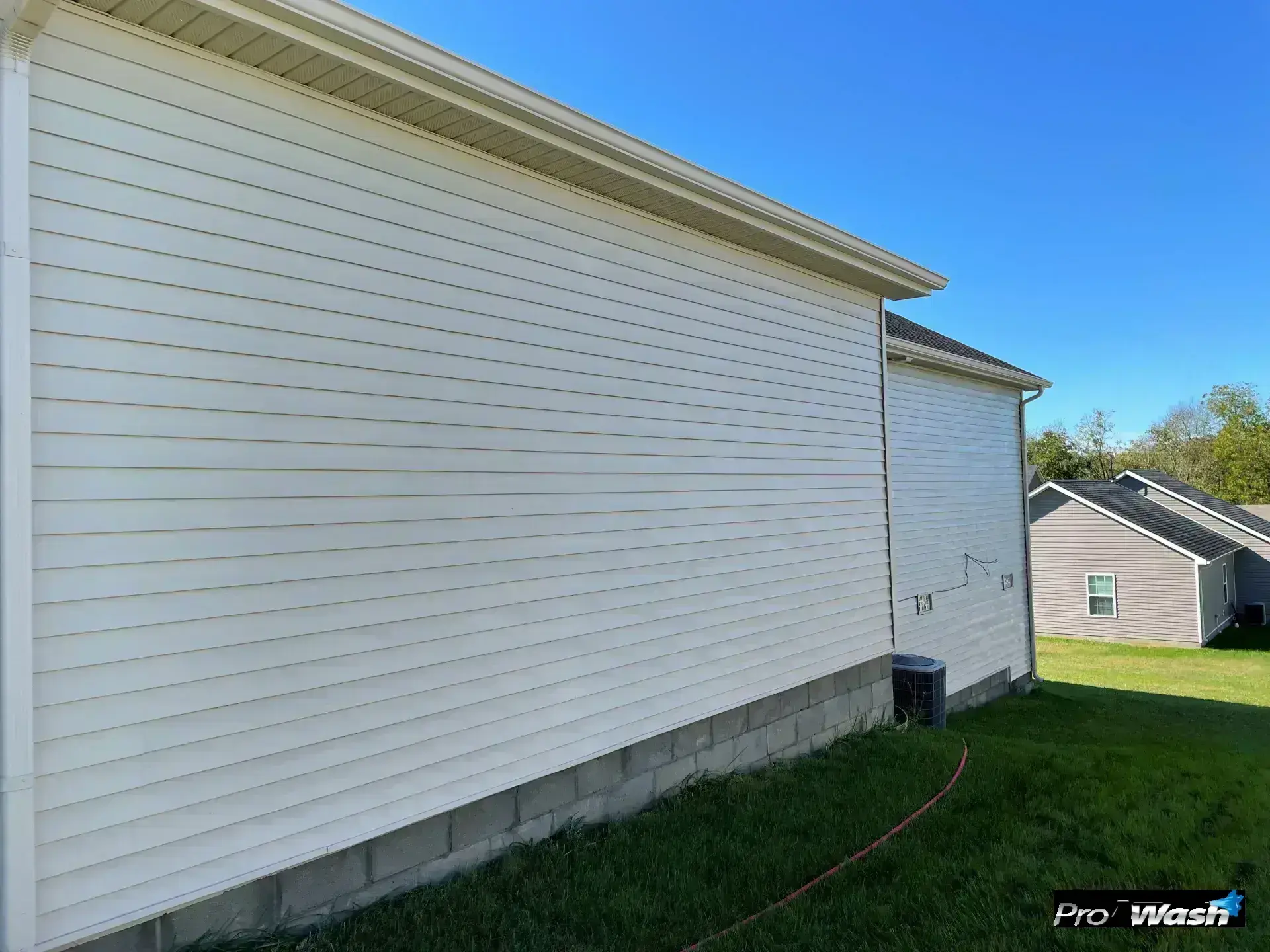
Most calls start the same way. Somebody says "how much to pressure wash my house?" and right there we've got a problem. Most of what we do isn't actually pressure washing in the technical sense. It's soft washing. The two are very different, and using the wrong one on the wrong surface causes real damage.
Here's the difference and when each one is the right call.
What Pressure Washing Actually Is
Pressure washing is exactly what it sounds like. Water under high pressure forced through a narrow nozzle to physically blast contamination off a surface. The pressure usually runs between 1,500 and 4,000 PSI on commercial machines. The water alone does most of the cleaning.
It works great on hard surfaces that can take the force. Concrete, ground-level brick, foundation block, pavers, parking lots, dumpster pads, garage floors. Anywhere you've got grease, oil, gum, or ground-in dirt on a tough material, high pressure does the work.
What Soft Washing Actually Is
Soft washing uses low pressure water combined with a cleaning solution. The chemistry does the cleaning, not the pressure. We're talking about pressure levels close to a garden hose, with much higher water volume.
The solution gets applied to the surface, allowed to dwell for ten to twenty minutes, then rinsed off. The dwell time gives the cleaning agent time to break down algae, mold, mildew, and bacteria all the way to the root. A low-pressure rinse carries everything off.
Soft washing is what we use on roofs, vinyl siding, painted wood, brick walls of houses, Hardie board, stucco, awnings, and anything else where high pressure could cause damage.
What Happens When You Use the Wrong One
Using high pressure on the wrong surface is the most common cause of cleaning damage we see. A few examples we run into regularly:
- Roof shingles. High pressure blasts the protective granules off the surface. Those granules are what give the shingle its UV protection and its rated lifespan. Once they're gone, the shingle is dying. The Asphalt Roofing Manufacturers Association says specifically to never pressure wash an asphalt shingle roof. Read their position here.
- Vinyl siding. High pressure forces water behind the siding through any gap. That water gets into the wall cavity, causes mold, and can rot the underlying sheathing. Vinyl can also crack or warp from concentrated pressure.
- Hardie board. Cement composition handles a little pressure, but joints and edges take damage. Painted Hardie can have its paint stripped by an over-pressurized wash.
- Wood decks. Pressure tears up the soft wood grain on cedar, pine, and pressure-treated lumber. The wood looks fuzzy or splintered after. We use moderate pressure on decks but only after a chemical pre-treatment.
- Window seals. Caulking and rubber gaskets around windows can be blown out by direct high-pressure spray.
- Painted surfaces. Pressure strips paint. That's how some commercial paint removal services work, but it's not what you want during a cleaning.
Using soft wash on the wrong surface is usually less damaging but less effective. Soft washing a concrete driveway just leaves it wet and a little cleaner. The dirt and oil need pressure to lift off. Worst case is wasted time and a cleaning that doesn't accomplish what you wanted.
How We Decide on a Job
It's surface-by-surface, not house-by-house. A typical exterior cleaning at a home in Lexington might involve:
- Soft washing the siding, roof, gutter exteriors, eaves, and soffits
- Pressure washing the driveway, sidewalk, and patio
- Moderate-pressure cleaning the deck after a chemical pre-treatment
That's three different methods on the same job. If you're getting a quote and the contractor only mentions one method or one machine, ask which surfaces get which treatment. The answer should be specific.
Questions Worth Asking Before You Hire Anyone
Five questions that separate a careful contractor from a guy with a rented machine:
- Will you be using soft wash or pressure wash on my roof? (Answer should be soft wash. If they say pressure wash, hire someone else.)
- What's your method for vinyl siding?
- What chemicals are you using and are they safe for landscaping?
- Do you carry insurance and can you provide a certificate?
- How long have you been doing this in Central Kentucky?
Anyone who's been doing this work seriously can answer all five in detail. If they hesitate or get vague, you're hiring someone who started last summer.
Both Methods Have Their Place
Soft washing isn't always better. Pressure washing isn't always better. The job is matching the right method to the right surface.
Call us at 859-312-0704 if you've got questions about your specific property. We're happy to walk through what's right for what you've got.